
WHAT THE DEVIL WEARS PRADA TEACHES US ABOUT WORKPLACE CULTURE
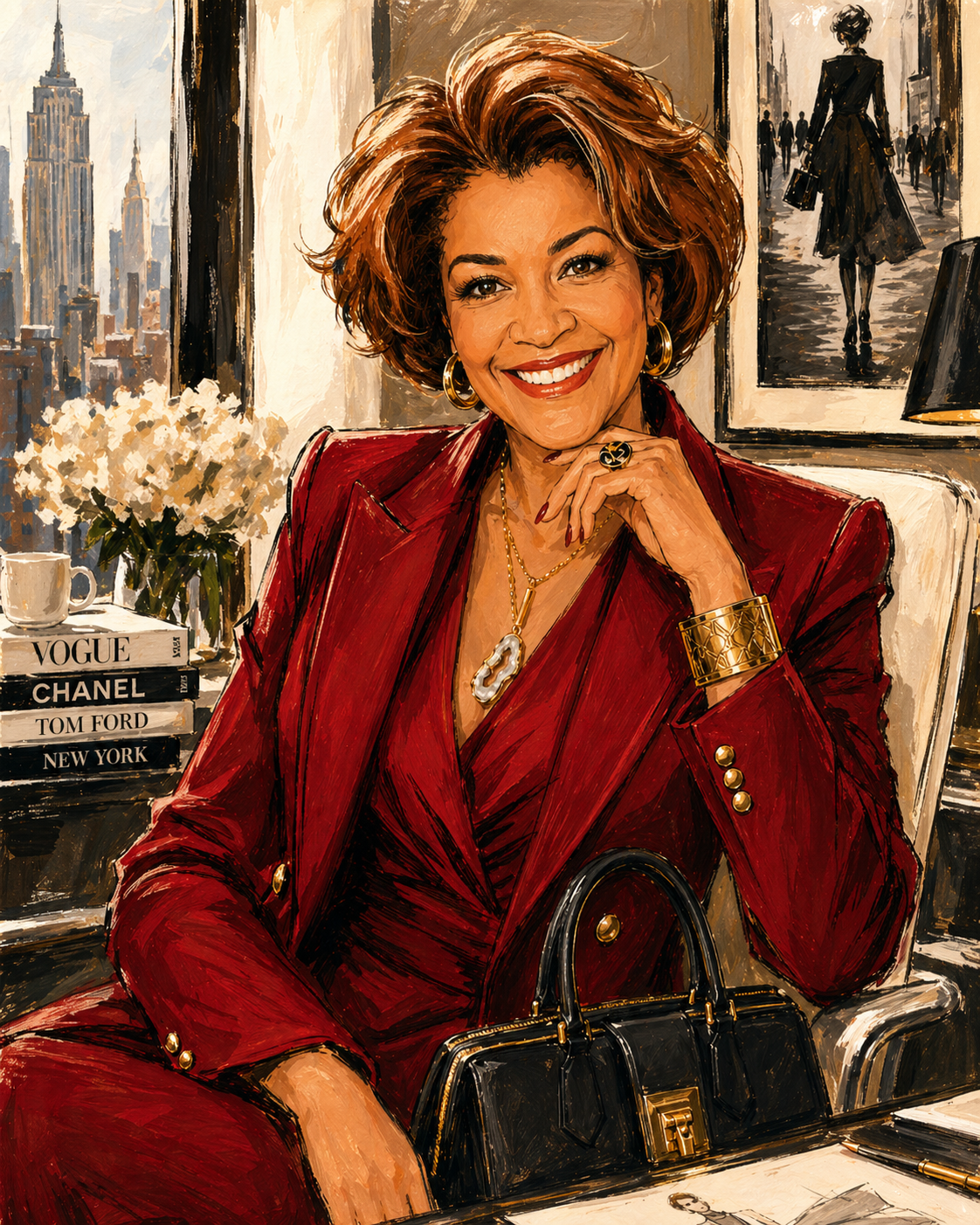
Yes, this Devil Wears Prada inspired image of me was AI generated.
But I think I like the hair.
The Devil Wears Prada was never only about fashion.
With the sequel arriving May 1, a lot of us are revisiting the original — and it holds up. Not just because of the clothes or the performances, but because every character in that film is a character most of us have already met at work. In the office. In the boardroom. In the hallway outside a meeting we weren't invited to.
This week's issue of Giant Steps with Leilani Brown uses the film as a lens for something more useful: how to read workplace culture, how to recognize the people shaping it, and what to actually do once you see it clearly. Because the film gives us a complete cast of workplace archetypes — and once you can see what each of them is doing, you cannot unsee it.
Andy Sachs — The One Who Doesn't Know the Rules Yet
Anne Hathaway's Andy is talented, smart, and credentialed — and delightfully naive and unprepared for the environment she has just walked into.
She thinks the job is about the work. She will learn — slowly, painfully, and at personal cost — that every workplace has a culture running underneath the org chart. A way things are done here that nobody is going to explain to you. Being good at your job is table stakes. The rest of it — who you know, how you carry yourself, what you're willing to trade — is what actually decides what happens next.
She thinks learning the rules means selling out, and that is why she resists it so much. It doesn't. You can adapt to context and still be authentically yourself. The goal is to learn the room — not lose yourself in it. Most of us have been Andy at some point, and some of us will be Andy in just a few weeks. And if you are, that is not a flaw. That is a beginning.
Nigel — The One Who Mastered the Rules and Still Lost
Stanley Tucci's Nigel is the character this movie gets most right — and, like many workplaces, treats most unfairly.
He is the unsolicited mentor, the one who gives you everything he knows without being asked — warm, sharp, genuinely invested in other people's success. He believes that eventually all of that goodness will pay off. The truth is that sometimes it does, but often it doesn't.
His grace under pressure becomes both his greatest asset and his greatest liability. Miranda knows he is a soldier. She has always known that proximity to power would be enough to keep him, and she has counted on it — so completely that when the moment of reckoning comes, she gives his opportunity to someone else without a second thought. When he finds out in front of an audience, he gets up, adjusts his coat, and keeps going. He is the best of them. And the system uses him accordingly.
Emily — The Frenemy Who Can't Get Out of Her Own Way
Emily Blunt's Emily is the colleague who will half-help you and half-bury you — and might not even realize she's doing either. She got there first, worked extraordinarily hard, and is now watching someone else get the opportunities she believed she was entitled to.
This is not unique to fashion, by the way. This can happen in any workplace where two people are competing for one thing. Emily is scared to death — but fear is not an excuse for how she treats Andy.
And sometimes Emily becomes something even more dangerous: the Gatekeeper — the person who controls access to information and makes you earn what should have been shared freely. Emily is the type of colleague who gives you just enough to survive and withholds the rest, who performs helpfulness and delivers obstruction.
What is most tragic about Emily is that she gets in her own way. She believes that scarcity is the only path to security, so instead of becoming allies, she and Andy become competitors — at least in her eyes. And bad bosses actually love it. They call it healthy competition. What it actually breeds is a toxic workplace culture where nobody wins, least of all the people doing it.
Miranda Priestly — The Keeper and Creator of the Runway Culture
You know this boss has arrived before she walks in the door. The energy shifts. People sit up straighter, conversations stop mid-sentence, and suddenly the most eloquent people in the room stutter.
I worked for someone like this. Revered. Feared. But ultimately, completely uninspiring. Because there is a difference between a boss people fear and a boss people are inspired to follow. Miranda commands the first. She never truly earns the second.
And yet — her intensity is not random. It is her leadership philosophy. Miranda's team learns what matters by watching what she reacts to, what she dismisses, what makes her go cold. The standard is never explained. It is performed. And everyone in that office learns to read it.
Miranda has written the unwritten rules at Runway — and everyone is following them. They shape how Emily competes, how Nigel sacrifices, how information gets hoarded, how loyalty gets rewarded and punished. Nobody had to say any of it out loud. Everyone learned it through behavior — through who got praised, who got access, who got protected, and who got sacrificed.
That is what workplace culture actually is. Not the mission statement. Not the values on the wall. The behavior the leader tolerates — and the behavior the leader rewards. Miranda is the culture architect. And the culture she built tells you everything about what kind of leader she actually is.
The Question the Movie Is Actually Asking
Here is what The Devil Wears Prada is really teaching us: every workplace has a culture. And your first job — before you decide whether to stay, adapt, or leave — is to read it accurately.
Who wrote the rules? Who benefits from them? Who is being consumed by them? Andy couldn't read it at first. Nigel read it perfectly and still lost. Emily misread it and turned herself into an obstacle. Miranda wrote it — and built a world in her own image.
The question isn't which character you are. The question is whether you can see the culture you're inside clearly enough to make a real choice. Because you cannot navigate what you cannot name. And you cannot change what you have not yet decided to see.
Seeing the culture clearly is the first move. Knowing how to navigate it — without losing yourself in the process — is the second.
This essay is excerpted from this week's issue of Giant Steps with Leilani Brown — a weekly Substack on career, leadership, and the real conversations about work that nobody else is having. Paid subscribers receive the full playbook this week: five specific moves for navigating the Andys, Nigels, Emilys, Gatekeepers, and Mirandas in your real workplace, including scripts, signals, and boundaries you can use immediately.